In de herfst van vorig jaar ben ik op uitnodiging van de Korea Press Foundation naar Zuid-Korea geweest. In het jongste nummer van de Korea Journalism Review heb ik een artikel geschreven over mijn ervaringen aldaar.
Categorie: in English
How did Twitter change political journalism in the Netherlands?
In the Netherlands, Twitter has become part of the public political debate. How do journalists in the Hague, where the Dutch parliament and government are seated, use social media? What effect does Twitter have on political journalism? Read my story for the Doha Centre for Media Freedom here: Twitter vs Tradition in the Netherlands.
South Korea’s media looking at the North
How do South Korean journalists get their information from their northern neighbour? While in South Korea, I wrote an article on that topic, which was published this week by the Doha Center for Media Freedom. Read it here: South Korea’s media looking at the North
Who is Evgeny Morozov?
By Peter Teffer
During any debate on the relevance of social media in revolutions someone will mention his name. Evgeny Morozov’s book The Net Delusion: How Not to Liberate The World (in the US: The Dark Side of Internet Freedom) has caused a stir in the world of internet scholars. Although he is only 27, Morozov’s has become an important voice in the debate on the revolutionary characteristics of the Internet, which was given a boost by the use of Facebook during the Tunisian and Egyptian uprisings.
In the book Morozov criticizes the ‘cyber utopians’ who claim that social media carry an intrinsic revolutionary aspect. He points out that authoritarian regimes are just as well able to use the internet, which is in fact a double-edged sword. After Iran’s so-called Twitter revolution in 2009 the government was able to arrest activists because they were all easily recognized from YouTube footage. Morozov’s critics think he has made a caricature of the cyber utopians. Some, like The New York Times’s Roger Cohen, ridiculed the timing of his book, January, “hitting stores just as the Facebook-armed youth of Tunisia and Egypt rise to demonstrate the liberating power of social media”. Morozov however by no means wrote that social media will never facilitate uprisings, just that dictators can use the tools just as well. Nevertheless Morozov seems to enjoy watching his critics “trip over one another in an effort to put another nail in the coffin of cyber-realism”, he recently wrote in the Guardian.
Who is this Belarusian young man, whose articles were published in The Economist, The Washington Post, Foreign Policy, Financial Times, and many more media.
Evgeny Morozov grew up in the mining town of Salihorsk, approximately 88 miles [140 kilometers] south of the Belarusian capital of Minsk. The city is just over fifty years old and has large amounts of potassium. Morozov’s parents moved from Russia to the, what Morozov calls a “relatively prosperous town”. Nevertheless chances for a young boy like Evgeny were small and when he got the chance to leave the authoritarian led country at 17, it was no surprise he did.
Supported financially by philanthropist George Soros’s Open Society Foundations, Morozov moved to Bulgaria in 2001 to study there at the American University in Bulgaria (AUBG). According to his former teacher Aernout van Lynden, he quickly turned out to be a disciplined and intelligent young man. “Evgeny is a fighter and a hard worker.” Although Morozov was officially studying business and marketing, he was also interested in taking journalism classes. Mr Van Lynden is a British-Dutch former war correspondent who at the time taught communication and journalism at the AUBG. Van Lynden remembers well how Morozov asked him for a 500 dollar donation*. “He wanted to travel to a conference, but didn’t have the money. Evgeny wanted to see and travel as much as possible, and wanted to build an a large network”, Van Lynden says in a conversation in The Hague. He was pleasantly surprised to find Morozov dedicating the book The Net Delusion to him. Van Lynden, Morozov writes, inspired him to write.
In 2005 Morozov moved to Berlin, where he studied a one year course at the European College of Liberal Arts (ECLA). Here too the Belarusian-born student took every opportunity to travel. In April of 2006 he was one of four ECLA-students to travel to Beijing, to attend the Harvard World Model United Nations.
By the time Morozov had already gotten involved with the nonprofit organization Transitions Online (TOL). This Prague based NGO trains journalists in Eastern Europe en Central Asia, and publishes an internet magazine. Morozov wanted to contribute to a blog TOL was publishing about his native country Belarus, which held presidential elections in March 2006 that were followed by protests. When Morozov sent in his blogs, TOL’s executive director Jeremy Druker was impressed. Druker, an American, calls his written English “amazing”. Morozov never lost his thick Russian accent, but his writings disguise his origins. For TOL Morozov held trainings on new media and worked as a blog coordinator. Druker says by phone from Prague that Morozov was “a high maintenance guy, not your average employee”. According to Morozov’s former boss he was constantly wanting to go further than possible. “But his youthful impatience was tolerable because he is so smart. He’s one of the most brilliant people I met here”, says Druker, who came to post-communist Europe from the US about twenty years ago.
His intelligence wasn’t lost on others too. Journalist Robert Cottrell is a member of TOL’s advisory board and met Morozov in New York in 2006. At the time Cottrell was deputy editor of The Economist’s website. Cottrell writes by email: “Evgeny was visiting New York, and I welcomed him into the office for a cup of tea and a talk. It was immediately apparent that he understood social media, and information in general, ten or twenty times better than I did. So my first thought was “how can I get this man to write for us?””
Early 2008 Morozov left Transitions Online, partly because he had become skeptical of what NGO’s can accomplish. Later that year he moved to New York to start his academic career as a fellow at the Open Society Institute. In September 2009 he got accepted at the Georgetown University in Washington D.C., where he became a Yahoo fellow at the Institute for the Study of Diplomacy. The Institute’s director says Morozov “absolutely” delivered. “He published a gazillion articles and he was on the radio every week”, Newberg says by phone. Morozov finished his first draft of The Net Delusion while still being a fellow, which Newberg says was enormously ambitious.
Ambitious, intelligent, hardworking. Evgeny Morozov, born in 1984, is not someone for smalltalk. When Monique Doppert, a Dutch programme officer at NGO Hivos, shared a train ride through the Netherlands from Amsterdam to Maastricht, Morozov spent the entire 2 hours and 26 minutes giving Doppert what she calls a lecture on the dark side of the internet. His former teacher Van Lynden describes Morozov as someone who works seven days a week.
Morozov himself admits being a workaholic. “Right now I’m working on six different book reviews, which is probably twice as much as the norm”, Morozov tells me in a Skype conversation. At the Stanford University in California, where he’s been working since September, Morozov is working harder than if he had become a banker. But he is okay with that, because “intellectually it’s very gratifying”, he says.
The 27-year-old doesn’t have much of a social life in Palo Alto, where he lives. “It’s a pretty isolated place. I have friends in San Francisco, but I don’t drive.” Most of his friends live elsewhere in the world, which is part of the reason he enjoys travelling. “Usually I try to spend six weeks in the library, and then hit the road for six weeks.” When I talk to him, he is Skyping from Berlin. That week he will tweet “Crossed the Atlantic third time in a week…Joy!”
Yet soon Morozov will have to settle down for a longer period again. He recently sold his second book, which will be a sequel to The Net Delusion. “My first book looked at the impact of the internet in authoritarian states. I want to look at those same themes in liberal democracies.”
* Update: Morozov let me know that in the case of Aernout van Lynden, Morozov had first asked Van Lynden to ask his wife at the embassy (“which made sense because I was going to a conference in NL”, Morozov wrote) for 300 euros. “She said no and Aernout gave me his own money.”
Dutch increasingly pay with virtual money
Less and less people in the Netherlands pay with cash. Paying with a card can lead to more spending because one doesn’t feel the ‘pain of paying’ as much.
by PETER TEFFER
 ALMERE, THE NETHERLANDS. On a sunny Wednesday morning Mr Hendrik van Dam (71) locks his bicycle in front of the C1000 supermarket in Almere, one of the youngest cities in the Netherlands in the central province Flevoland. He’s out to buy some beers for tonight’s football match. Van Dam carriers „12, maybe 13 euros”. „I usually pay cash. I prefer having a clear idea of what I’m spending”, says the retired accountant.
In Mr Van Dam’s supermarket, only two out of six cash registers accept cash. And the number of places where paper money is accepted are only decreasing. Since six months Almere is something of a financial laboratory. Supermarkets and other shops try to persuade their customers to pay with a debet card – the most common way of paying with virtual money here. Regularly stores in Almere suffer from robberies and therefore want to reduce the number of cash money in their possession.
Mr René Verschuren, store manager of this C1000, was already planning to make two of his cash registers card only, but after a raid in February he decided to switch four of them to card only. Verschuren estimates that within three years cash money in his supermarket will be consigned to the history books. Complaints from his customers don’t last, he says. ,,In the first week some of them said: I’ll never come here again. A couple of weeks later I already saw those customers back in my shop.”
The number of cash payments has been decreasing in the Netherlands for years. In 2007 62.7 percent of all payments were done in cash, in 2008 that number had decreased to 60 percent. Some entrepreneurs take a step further and ban all cash from their stores.
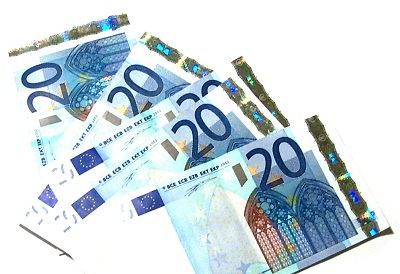 Since yesterday owners of ships can only visit the harbour of Almere if they have a bank card. Supermarket Marqt, which sells organic and sustainable products, also accepts no cash at all. ,,It’s safer, but moreover more efficient”, Marqt writes on its website.
Almere is a front runner. The local government started project ‘cashless Almere’ to reduce the number of robberies. Since the project started last year November the number of card machines in shops has risen with 8 percent.
Almere’s mayor Mrs Annemarie Jorritsma is proud. ,,Supermarket Deen in district Almere-Buiten only has one cash checkout left, isn’t that fantastic?”, Jorritsma rhetorically asks in here study in Almere’s town hall. For Jorritsma herself often weeks go by without her having any cash money in her wallet. ,,As cashless Almere’s figurehead I’m quite embarrased if I do have to pay in cash”, she says.
The mayor hopes that within two or three years coins and paper money have close to disappeared in Almere. ,,Personally I think we can get rid of cash money entirely.”
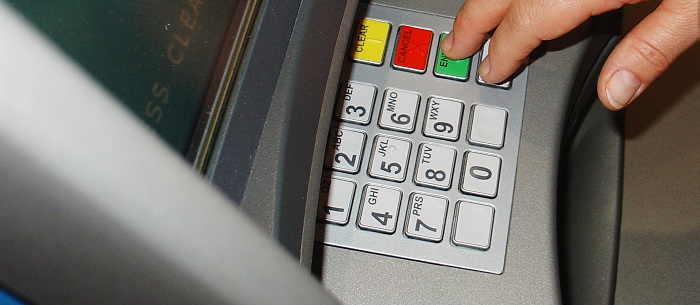
The question if it will ever get that far. In her own municipality Jorritsma has met some political resistance. The Party of United Seniors is against a ban on cash. ,,Home cleaners get paid in cash. They want to shop with that money too”, says Cor Pot, council member for the party of seniors. ,,There should always be at least on checkout where you can pay with cash”, he says. A second party in the council, oppositional Leefbaar Almere, has a similar view.
A risk is that consumers will be spending excessively. Spending physical coins and paper money is more transparent than paying by card – you literally can feel your wallet become more empty. ,,With electronic paymnets you don’t feel that pain of paying as much”, says Professor of social psychology Eric van Dijk (University of Leiden). Do people spend more money in stores where you can only or mostly pay electronically? Van Dijk: ,,That’s not a daring prediction.”
Bob Goulooze, spokesman for Currence, confirms this notion. Currence owns PIN, the mostly used card type. According to Goulooze stores see their profits rising once they switch to PIN. ,,Electronic payments are good for economic growth”, he says. ,,For a long while I couldn’t pay my hair dresser with PIN. So when I was paying for the 17 euro haircut with the twenty I had on me, I didn’t carry enough to pay the 4 euro shaving cream. Now I pay with my card and tell him: why don’t you add some razors as well.”
This article was published in Dutch in the national daily newspapers nrc.next (June 2nd, 2009) and NRC Handelsblad (June 4th, 2009). Photos from Stock.xchng
 Peter Teffer